
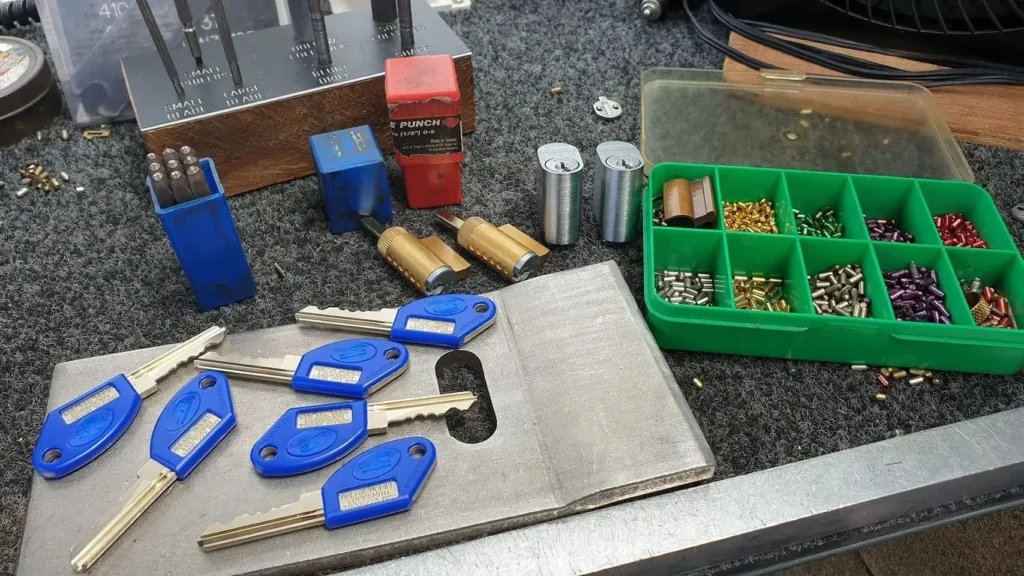
A restricted key system is designed to control who can obtain additional keys. Unlike an ordinary key that may be copied without the property owner knowing, a restricted system uses an agreed authorisation process before new keys are supplied.
The purpose is not to make a key impossible to lose or misuse. It is to create a clearer chain of control around duplication, issue records and future access changes.
What is a restricted key system?
A restricted key system uses a protected key profile and an authorised supply process. Additional keys are issued only when the person requesting them has the required authority.
These systems are commonly used in commercial premises, schools, body corporate properties, managed buildings, medical practices, workshops, warehouses and homes where key control matters.
How does controlled key duplication work?
The system owner or authorised representative establishes who may approve new keys. When another key is required, the request is checked against the recorded authority before the key is supplied.
The exact process depends on the selected system and supplier, but it may include:
- Authorised signatories
- Written or recorded approval
- Key identification numbers
- Issue records
- Defined procedures for adding or removing authorised people
How is a restricted key different from an ordinary key?
An ordinary key can often be copied by any suitable key-cutting service if the blank and equipment are available. The property owner may never know how many copies exist.
A restricted key is supplied within a controlled system. The key profile, supply arrangements and authorisation process are intended to reduce unauthorised duplication.
Does restricted mean the key cannot be copied?
No system should be described as absolutely impossible to copy. The practical benefit is that legitimate duplication is controlled through an authorised channel rather than being casually available.
The strength of the system depends on the platform, how authority is managed and how carefully issued keys are recorded.
What are the main benefits?
- Greater control over additional keys
- Clearer records of who has been issued access
- Reduced risk of casual or unknown duplication
- Better administration when staff, tenants or contractors change
- Compatibility with keyed-alike or master-keyed arrangements
- A more structured response when a key is lost
Where are restricted key systems useful?
Businesses
Restricted keys help businesses control duplication when staff, cleaners, contractors or managers require access.
Body corporate and strata properties
Residents may hold keys for common entries while building managers retain authority over additional copies and higher-level access.
Schools and community facilities
Classrooms, offices, storerooms and maintenance areas can be managed through a documented issue process.
Medical and professional premises
Consulting rooms, records areas and staff-only spaces may require tighter duplication control.
Homes and home businesses
Larger homes, managed properties and home businesses may benefit where cleaners, carers, staff or contractors receive keys.
Can restricted keys be used with a master key system?
Yes. A restricted master key system combines controlled duplication with planned access levels. One person may have a key for a single office, while a manager holds a broader key that opens several nominated doors.
Read What Is a Master Key System and How Does It Work? for a full explanation of access hierarchies.
What is the difference between restricted, keyed alike and master keyed?
| Term | Meaning |
|---|---|
| Restricted | Controls how additional keys are authorised and supplied |
| Keyed alike | Several locks operate from the same key |
| Master keyed | Different keys have different levels of access |
These features can be combined. For example, several locks may be keyed alike on a restricted platform, or a complete master key hierarchy may use restricted keys.
What happens when staff or contractors leave?
Returned keys should be recorded, but returning a key does not prove that no duplicate exists. A restricted system reduces casual duplication, but the organisation still needs a clear offboarding process.
Where risk is significant, the affected cylinders may need to be rekeyed or the access plan adjusted.
What happens if a restricted key is lost?
A lost restricted key can still operate the locks it was issued for. Duplication control does not remove the need to assess the security risk.
The response should consider:
- Which doors the key opens
- Whether the key can be linked to the property
- Whether it was lost or stolen
- Whether the key has broad or limited access
- Whether the relevant cylinders should be rekeyed
How should authorisation be managed?
The best system is only as good as its administration. The system owner should keep current records showing:
- Who may authorise additional keys
- Which key each person holds
- When the key was issued
- Whether the key has been returned
- What to do when authorised personnel change
Authority should be attached to roles or named representatives rather than being left vague.
Can existing locks be converted?
Sometimes. Existing locks may accept compatible replacement cylinders or may be rekeyed as part of the new system. Other hardware may need replacement.
The answer depends on the lock type, cylinder format, door condition and selected restricted platform.
How is a restricted key system planned?
- List the doors and locks to be included.
- Identify who needs access to each area.
- Decide whether locks should be keyed alike or master keyed.
- Choose who may authorise additional keys.
- Plan how keys will be issued, recorded and returned.
- Allow for future doors, staff and tenancy changes.
- Confirm which existing hardware can be retained.
Common mistakes
- Treating restricted keys as a substitute for good administration
- Allowing too many people to authorise new keys
- Failing to record issued keys
- Not updating authority when staff change
- Ignoring lost keys because they are restricted
- Building an unnecessarily complicated access hierarchy
- Assuming every existing lock is compatible
Frequently asked questions
Can a restricted key be copied at a shopping-centre key cutter?
Legitimate duplication should be handled through the authorised supply process for the system.
Does a restricted key stop former staff using an old key?
No. If the key is not returned, it may still operate the locks. Rekeying may be required.
Can a restricted system use one key for several doors?
Yes, where compatible locks are keyed alike or incorporated into a master key system.
Are restricted keys only for large businesses?
No. Small businesses, strata properties, clinics and homes may also benefit where duplication control is important.
Can the system be expanded later?
Usually, if future growth is considered during the initial design.
Need help planning a restricted system?
Abetta Mobile Locksmith supplies and maintains restricted key systems for Sunshine Coast businesses, body corporates and managed properties.
View our restricted key system service, master key system service, or request a site assessment.