
Installation • Plan before ordering
A safe’s protection depends on how it is installed and used. Assess the property before choosing a heavy model, and obtain a quote that clearly includes the work needed to secure it.
Choose the location and the safe together
Keep the safe out of routine view, while preserving comfortable authorised access. Check door swing, shelf access, keypad visibility and clearance for the handle. A location you find awkward to use can encourage leaving valuables outside the safe or leaving it unlocked.
Think about the surrounding structure, removal risk, dampness, water exposure and fire conditions. For Sunshine Coast properties, assess the particular site’s flood and moisture risks rather than assuming every address has the same exposure. ASIC’s Moneysmart guidance suggests asking the council about natural-hazard information when assessing insurance.
Before delivery: a site checklist
- Floor capacity: establish whether the structure supports the safe and contents. Suspended floors or uncertain construction may need an engineer’s assessment.
- Substrate: confirm the anchor design is suitable for the actual slab, masonry or other structure.
- Concealed services: check drilling locations for pipes, wiring, waterproofing and any structural restrictions such as post-tensioned slabs.
- Moving route: measure gates, corridors, doorways and lift access; record steps, steep driveways and fragile finishes.
- Final clearances: check handle projection, door opening and room to operate the lock.
- Approvals: obtain any required owner, body corporate or building approval before fixing or structural work.
- Insurance conditions: confirm placement and fixing requirements before the installer arrives.
Anchoring: follow the exact model’s instructions
Do not rely on weight or concealment alone. Follow the manufacturer’s fixing requirements and the insurer’s conditions. Supplied holes and bolts are not proof that every floor will accept the same anchoring method. A specialist should select suitable anchors and install them for the actual substrate.
Do not drill extra holes through a rated safe, change its barrier construction or improvise a mounting method without the manufacturer’s approval. Such changes can affect performance or certification. Keep a record of the model, serial number, fixing method and installer’s invoice.
CMI’s Homeguard and Commerce brochures both provide anchoring provisions, reinforcing the importance of model-specific planning: Homeguard brochure · Commerce brochure.
What should an installed quote include?
| Item | Confirm in writing |
|---|---|
| Delivery | Kerbside, room placement or complete installation? What happens if access is unsuitable? |
| Handling | Equipment, stairs, lifts, floor protection and any additional charges. |
| Fixing | Anchor method, substrate assessment and any preparatory work. |
| Handover | Lock demonstration, owner instructions and secure transfer of keys or initial codes. |
| Support | Warranty scope, travel charges, servicing and lost-access procedure. |
Choose a lock you can manage securely
Key lock
Plan who holds keys, where spares are secured and how lost keys are handled. Keeping the spare beside the safe defeats much of the access-control benefit.
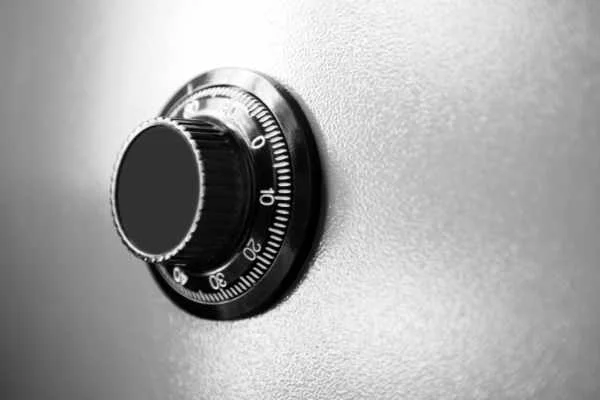
Mechanical combination
Make sure authorised users can operate it reliably. Ask how combinations are changed and who provides service. Record recovery information securely, separately from the safe.
Electronic lock
Ask about battery replacement, low-battery warnings, approved recovery procedures and service support. For a business, enquire about individual user codes, audit records or time delay if needed. Do not assume every electronic lock provides these functions.
Handover and ongoing ownership
- Inspect the safe, fixing, door alignment and lock operation before accepting the job.
- Change initial codes using the maker’s instructions and test while the door is open.
- Store spare keys and recovery information securely away from the safe.
- Limit access and change authorised access when staff or household circumstances change.
- Use only the maker’s recommended maintenance. Do not spray general lubricant into a safe lock unless its instructions permit it.
- Retain receipts, certificates, insurance acceptance and an inventory elsewhere.
Buying second-hand or moving an existing safe
Ask for the model identity, available certificates, service history, previous drilling or repairs and the condition of fire seals and boltwork. Have the lock and structure assessed; do not assume the original rating remains valid after modification or damage. A bargain safe can become expensive once transport, recommissioning and anchoring are included.
Relocation needs a new site assessment. Heavy-safe handling is specialist work; arrange a suitable mover rather than attempting an improvised lift.
For general door and property security, see residential locksmith services and commercial locksmith services. Safe supply, specialist handling and installation should be confirmed directly with the relevant provider. Return to the safe buying guide. Reviewed 10 October 2026.